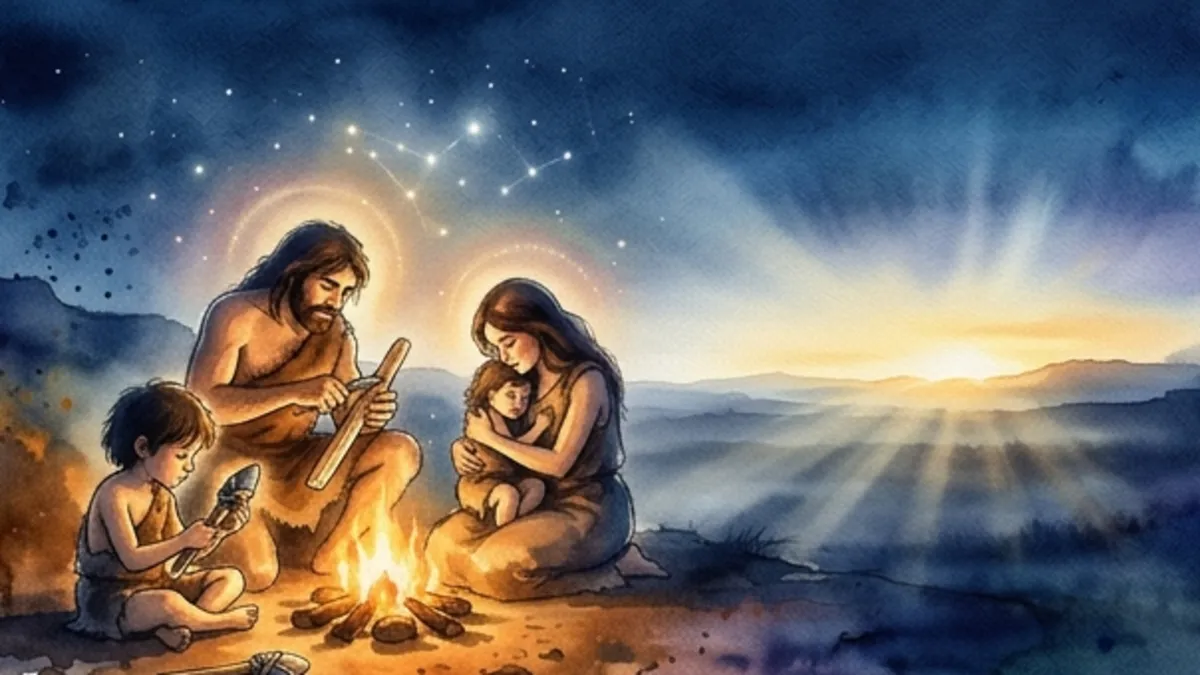
Imagine Earth after its long preparation: seas, forests, animals, stone, wind and sky already in place. Then a new being arrives, late and fragile, yet carrying something astonishing. Hands are free. Thought can travel beyond the visible. Love can turn toward another person and say, in action, you matter.
A late arrival with open hands
In the Third Great Lesson, humanity does not enter as the owner of the world. The child first receives the vastness of what came before: the cooling Earth, the coming of life, the patient work of plants and animals. Only near the end does the human being appear, standing upright in a world already rich with possibilities.
The lesson then draws attention to three gifts. The hand can make, repair, carry, draw and comfort. The mind can wonder about stars, rain, time and tomorrow. Love can choose relationship, care and responsibility. These are not three trophies. They are three ways of serving life.
Why the gifts belong together
As a supplementary resource for Montessori practice, this moment protects the story from becoming a celebration of cleverness alone. A clever hand without love can damage. A bright mind without service can grow cold. Love gives the other two gifts their direction.
Children understand this when we make it concrete. They can see that a hand tying a knot, a mind asking a question and a heart noticing sadness are all part of the same human task. The lesson becomes an invitation: your gifts are not only for yourself.
Try this today: place three objects on a cloth: a tool, a magnifying glass and a small heart or photograph. Ask a child where they used hands, mind or love today.
Which of your human gifts is asking to be used with more care today: your hands, your thinking, or your love?