A child looks at a page and sees little marks. Then, almost secretly, the marks begin to speak. A few strokes become a voice, a name, a joke, a promise. The Fourth Great Lesson pauses at this astonishing threshold: human beings learned not only to draw what they saw, but to give a visible body to sound itself.
When pictures loosened their grip
The story of writing begins close to the hand: scratches in clay, marks on stone, pictures that helped people remember cattle, grain, names and journeys. Such signs were powerful, but they carried a burden. A picture of a foot might mean a foot, walking, speed, arrival, or a thousand other things. The reader needed context, training and patience.
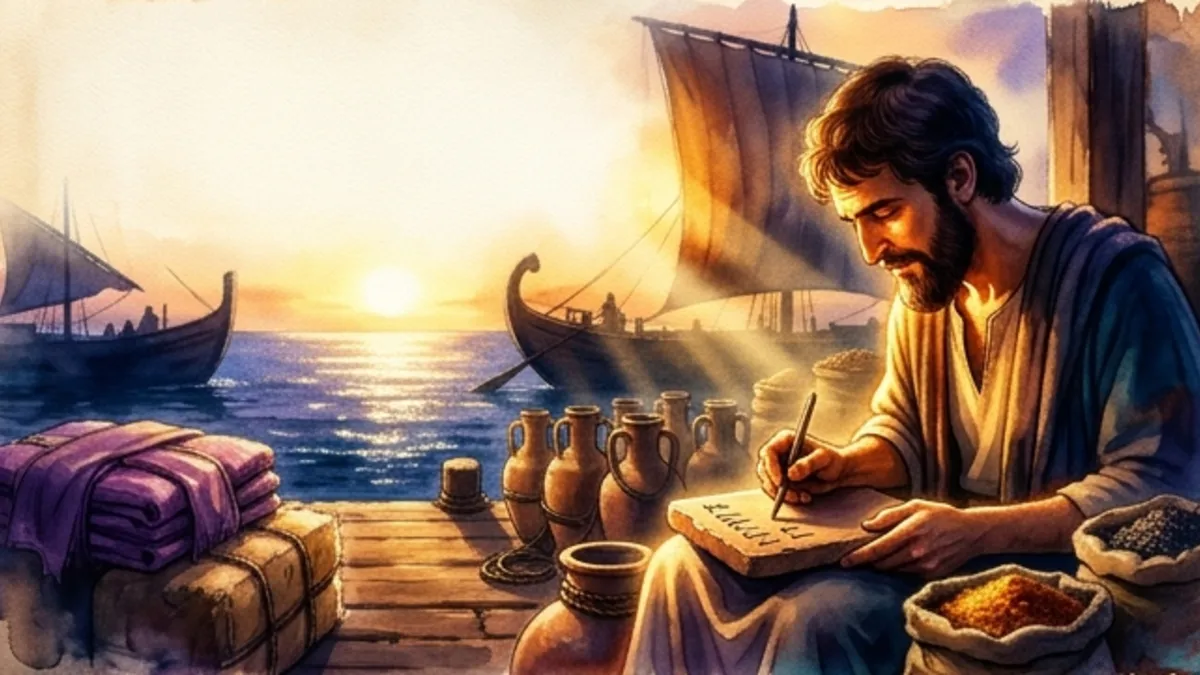
Then comes the decisive simplification. Along the trade routes of the eastern Mediterranean, seafaring merchants needed writing that was quick enough for daily life. The brilliance was not to make more signs, but fewer. A familiar picture could be stripped of its object and kept only for the first sound of its name. Ox, house, door, water: each image slowly became a sound mark. Once a sign could stand for a sound, writing no longer had to draw the world. It could follow speech.
That is why the alphabet feels so ordinary and so miraculous at the same time. With a small family of signs, children can build words they have never seen before. They can write the name of a shell, a moon, a grandmother, or a dream. A system born from practical trade becomes a doorway into memory, poetry and friendship.
Letters as inherited tools
In Montessori practice, this moment does more than explain where letters came from. It changes the child's relationship with them. Letters are no longer school marks to be copied neatly; they are inherited tools, passed from hand to hand through many peoples. The child who traces a sandpaper letter is touching a very old human solution: how to let thought travel farther than the voice can carry it.
As a supplementary resource for Montessori practice, this impulse invites adults to slow down around early writing. Before correcting spelling or spacing, we can notice the wonder: the child is placing sound outside the body. A note on a table can wait for someone. A birthday card can cross a city. A label can hold a discovery until tomorrow.
Try this today: choose one real message with a child: a note for a neighbour, a label for a collected stone, a card for someone far away. Say the words aloud first, listening for their sounds, then let the child see how those sounds settle into signs that can travel without you.
Which small message in your home deserves to leave the voice and become visible today? And how might a child feel when a thought they wrote is read by someone who was not there?